AI EVALUATION
AI Evaluation for Mechanical Engineering
I develop engineering problems, build reference solutions, and evaluate AI-generated drawings and analysis against measurable requirements. The goal is to turn each shortfall into a practical recommendation.
From engineering problem to model evaluation
01 Define the engineering problem
Confirm scope, source files, design constraints, and expected deliverables.
↓
02 Write the task and acceptance criteria
Specify observable pass conditions, audit the brief for unintended hints, and get an independent review.
↓
03 Build the ground truth
Prepare reference drawings, calculations, and a technical report. Document assumptions and limitations.
↓
04 Validate the scoring checks
Link each criterion to observable evidence and confirm the reference solution passes before scoring model outputs.
↓
05 Run the AI models blind
Give each model the same brief and inputs under matched settings. Track execution failures separately.
↓
06 Grade and compare the results
Judge completed outputs against the same criteria, resolve disagreements, and identify recurring shortfalls.
↓
07 Recommend fixes and verify the report
Tie recommendations to the evidence and verify the run and grading settings against the protocol before reporting results.
What makes a reference solution reliable
Ground truth is the reference solution for the task. For a drawing evaluation, I use the native CAD, reference drawings, a calculation workbook, and a technical report together. The drawings show the intended controls. The workbook checks what they imply, and the report records the assumptions and limits of the conclusion.
For example, when a problem combines functional fit and clearance, the reference calculation checks both requirements in the same permitted assembly position. The scoring key links each requirement to a drawing callout, a calculation, or evidence that the source geometry was preserved.
AI-generated drawing examples
These four outputs illustrate how I review drawing views, datum references, and tolerance callouts against the engineering brief. Select a drawing to open the full-size sheet.
Connector casing · Standard reasoning
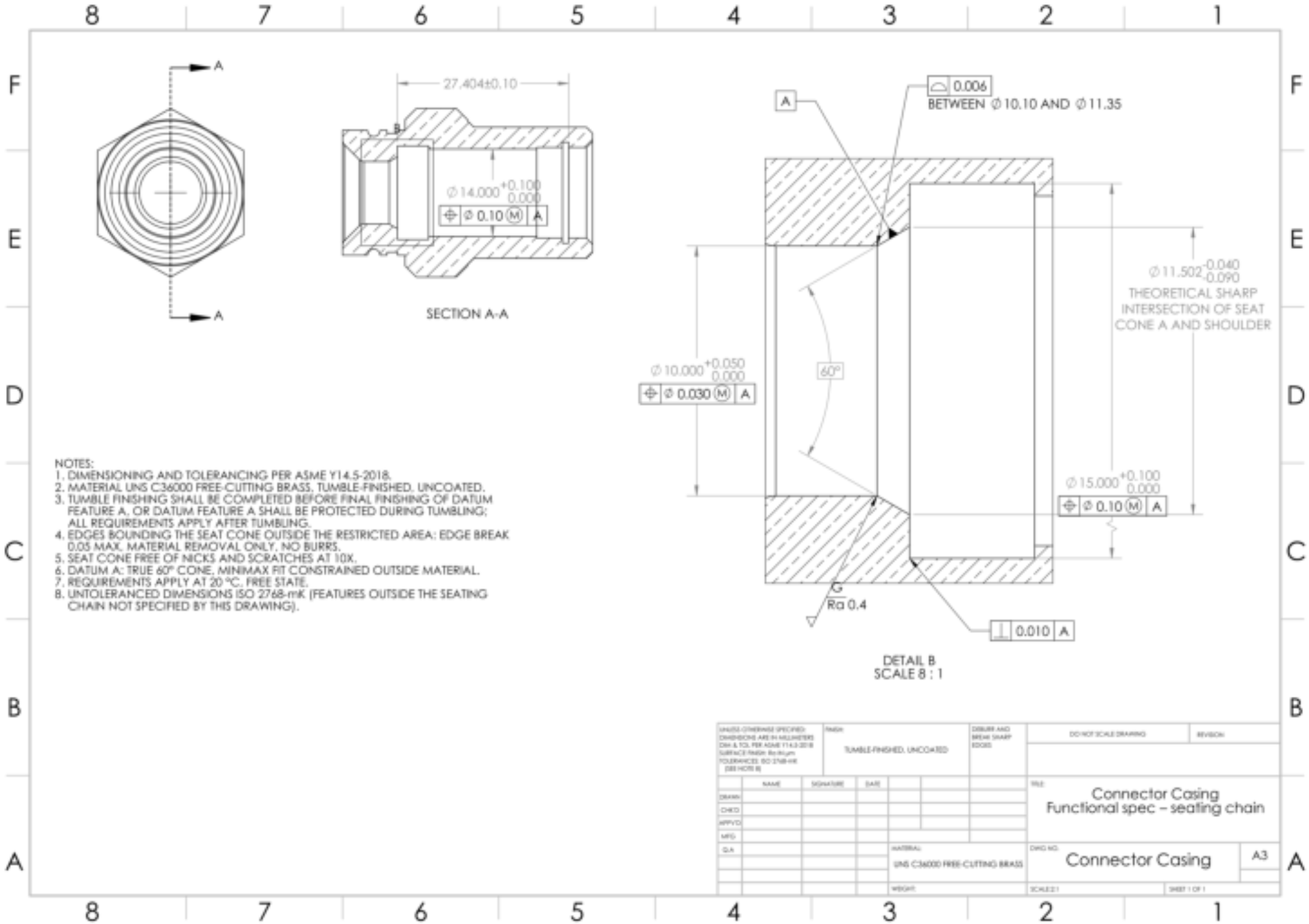
Model A
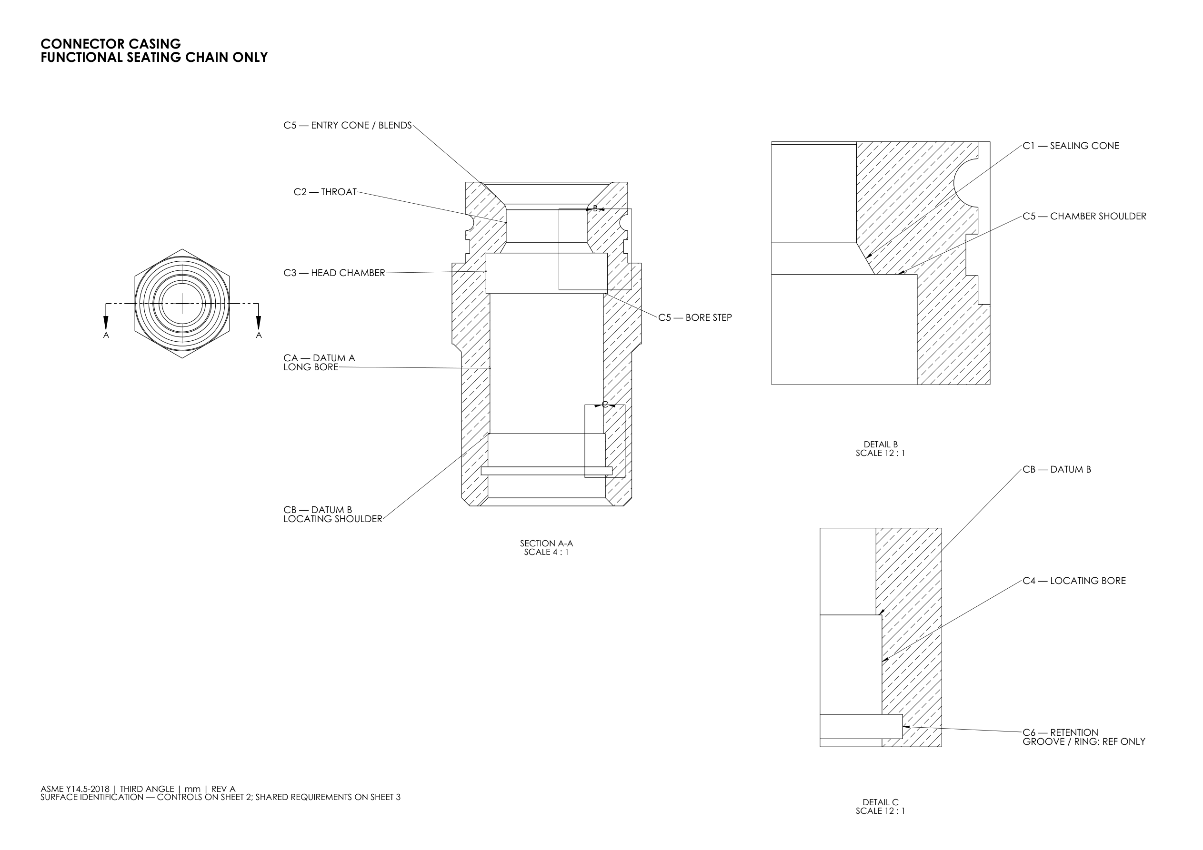
Model B
Poppet · Extended reasoning
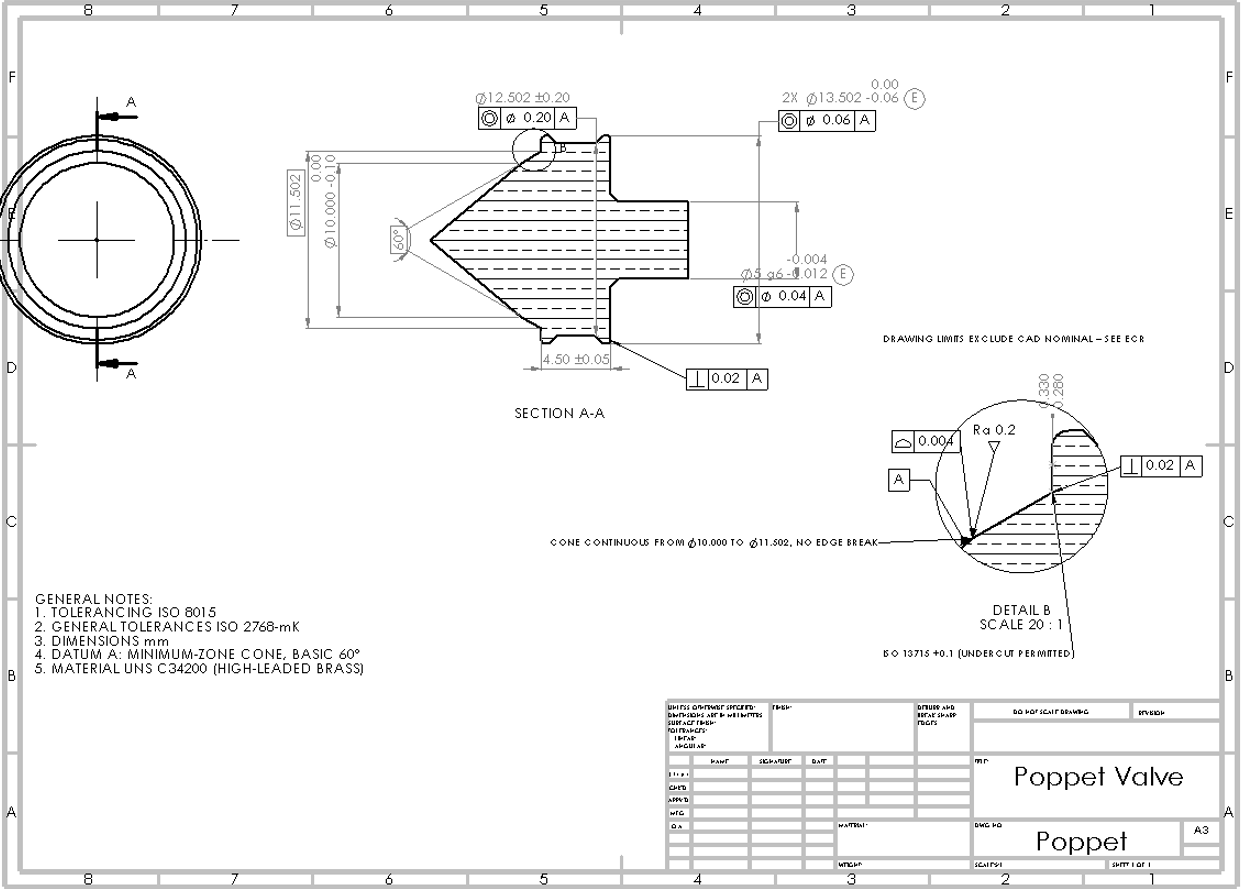
Model A
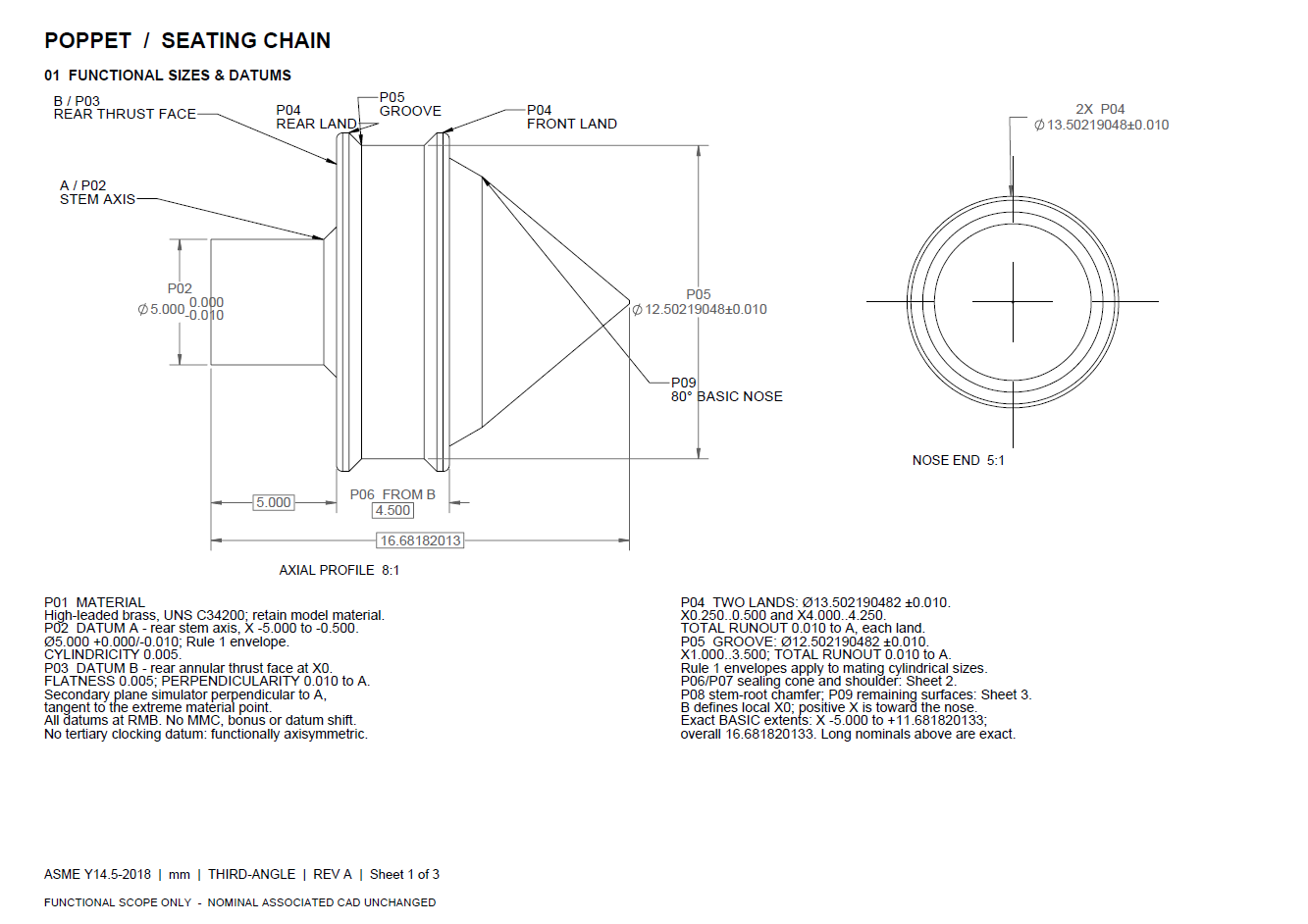
Model B
Turning shortfalls into recommendations
For each shortfall, I record the requirement, where I checked for evidence, and what would resolve the issue. If a drawing leaves an inspection reference unclear, I identify the affected feature and ask for the datum reference to be made explicit. If the drawing and calculation disagree, I ask for both to be checked against the same requirement before rescoring.
Before reporting a comparison, I verify that the model runs and the grading used the required settings. If they differ from the protocol, I record the mismatch and repeat the affected work under the correct conditions.